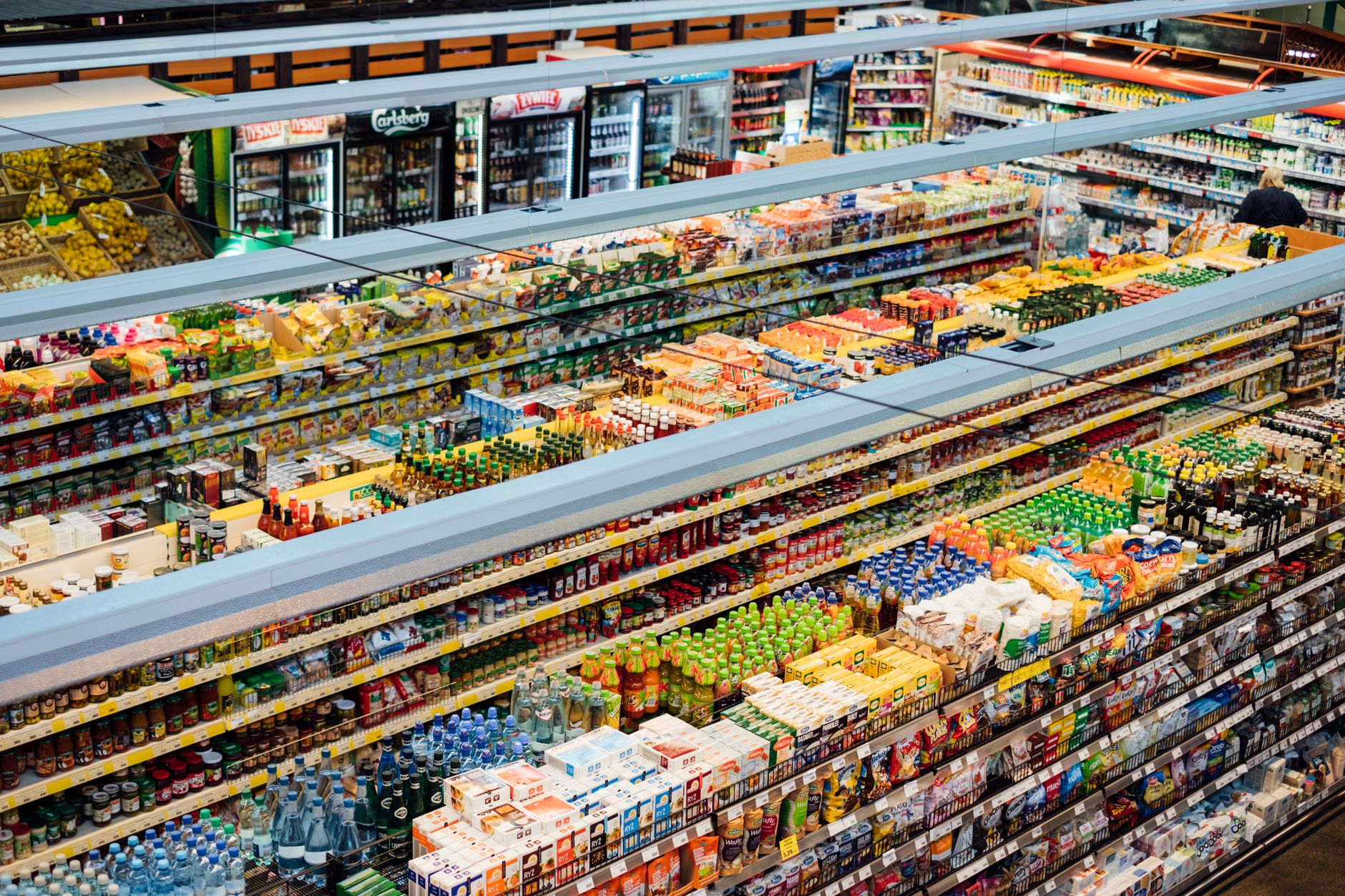
A food and beverage brand identity must identify the brand and product, organize required information, support accurate expectations, and remain coherent across SKUs, formats, channels, and production conditions. Packaging is a primary application of the identity and should be tested as a working system.
Define the information hierarchy
List the decisions a buyer needs to make in each channel. The package or listing may need to communicate brand, product type, variant, format, quantity, benefit, flavor, ingredient or sourcing information, use occasion, required disclosures, and other approved claims. Assign a clear priority to each element.
Test the hierarchy at actual size and distance. Review physical packaging, retailer shelves, mobile thumbnails, search results, cases, displays, and direct product pages. A detail that works in a presentation may disappear in production or at small scale.
Build an extensible packaging system
| Component | Rules to define |
|---|---|
| Brand and product names | Hierarchy, lockups, length, pronunciation, and relationships across the portfolio |
| Color | Brand recognition, variant coding, contrast, printing values, substrates, and channel use |
| Typography | Hierarchy, legibility, character range, production size, licensing, and required information |
| Imagery and illustration | Subject, composition, styling, accuracy, ownership, and adaptation across products |
| Claims and descriptors | Approved language, evidence, qualifiers, placement, review, and update ownership |
| Layout | Fixed and flexible zones, format changes, panels, cases, displays, and digital crops |
Test production conditions
Review material, shape, print method, color limits, finishes, labels, closures, manufacturing tolerances, shipping, storage, and retailer requirements with production partners. Confirm that the intended identity survives the actual substrate and process.
Build prototypes for representative and difficult cases. Include the smallest format, longest name, most complex required copy, lightest and darkest variant, low-color production, and any package that changes shape or material.
Separate recognition from variant navigation
The system should preserve shared brand recognition while helping buyers distinguish product type, flavor, function, size, or other variants. Decide which elements remain stable and which elements change. Do not rely on color alone where accessibility or production conditions require additional signals.
Align physical and digital commerce
Retailer thumbnails and mobile listings may reduce the package to a small image. Define crops, alternate product images, short names, title conventions, and supporting assets that preserve identification and hierarchy. Ensure direct, marketplace, retailer, wholesale, and foodservice materials use the same approved terminology and claims.
Control legal and regulatory review
Food and beverage packaging can contain regulated information and claims. Assign qualified legal, regulatory, nutrition, or category specialists as required by the product and market. The identity process should provide space, hierarchy, and change control for their approved content.
Plan for rollout and maintenance
- Inventory packaging, listings, displays, sales tools, photography, templates, and partner files.
- Coordinate inventory depletion, production lead times, retailer resets, and digital updates.
- Maintain current artwork, copy, specifications, claims, and approval history.
- Define how new products, formats, and channel requests enter the system.
- Review the identity after real production and use, then correct recurring gaps.
A useful food and beverage identity performs as a coordinated packaging and channel system. It gives customers clear information and gives internal and external teams reliable rules for extending the brand.
Dos Caras Tequila shows a food-and-beverage system working across labels, boxes, photography, video, and digital platforms. Saint Enzo shows how a restrained system of color, typography, hierarchy, texture, and photography can remain consistent across packaging, content, and paid media. Review the Dos Caras and Saint Enzo work.
For the broader system definition, read What a Visual Identity System Is and What It Must Do.